Beef Liver Supplements: Benefits, Dosage, and Safety
124,844 Views
Evidence Based
iHerb has strict sourcing guidelines and draws from peer-reviewed studies, academic research institutions, medical journals, and reputable media sites. This badge indicates that a list of studies, resources, and statistics can be found in the references section at the bottom of the page.
Nutrient-Dense Convenience: Get the benefits of fresh liver (vitamins A, B12, iron, copper, and choline) in a concentrated, tasteless capsule without synthetic additives.
High Bioavailability: Liver capsules provide a natural, complete nutrient matrix, offering highly absorbable heme iron and B vitamins compared to synthetic multivitamins.
Quality Matters: For maximum nutritional value, choose supplements that are "grass-fed and grass-finished," freeze-dried, and third-party tested.
Toxin Myth Debunked: The liver processes and eliminates toxins; it doesn't store them. What it stores are nutrients, which is why it's dense and not risky from a toxin standpoint.
Crucial Safety Cautions: Consult a doctor before use if you are pregnant, take blood thinners, or have hemochromatosis (iron overload), gout, or existing liver conditions.
Beef liver has one of the densest nutrient profiles of any single food, and beef liver supplements exist because almost nobody wants to eat it regularly. Desiccated liver capsules let you get the vitamins A, B12, iron, copper, and choline without cooking, tasting, or smelling raw organ meat.
This guide covers what's actually in beef liver supplements, how they compare to fresh liver and synthetic multivitamins, what to check before buying, who should be cautious, and how to dose them correctly, including the interactions most competing articles skip entirely.
What are beef liver supplements?
Beef liver supplements are made from desiccated (freeze-dried, heat-dried, dehydrated) beef liver, ground into a powder and encapsulated or pressed into tablets. The process concentrates the liver's naturally occurring nutrients; it doesn't add anything synthetic.
Most products use grass-fed, pasture-raised beef liver.
How does beef liver nutrition compare to a multivitamin?
A 3.5-ounce (100 g) serving of fresh beef liver supplies well over 100% of the Daily Value for vitamin B12, vitamin A, riboflavin, folate, copper, and iron. Desiccated capsules concentrate this same profile; a typical daily dose approximates a fraction of a fresh-liver serving, though the exact equivalence differs by a brand's drying method and dosing. Check actual milligram content rather than marketing phrases like "equivalent to X ounces of liver."
Here is the nutritional breakdown per 100g of fresh beef liver:
Vitamin B12: ~1,000%+ Daily Value (Nerve function, red blood cell formation)
Vitamin A (retinol): ~300–500%+ Daily Value (Vision, immune function, skin)
Copper: ~200%+ Daily Value (Iron metabolism, antioxidant enzymes)
Folate (B9): ~65% Daily Value (DNA synthesis, cell division)
Heme iron: ~35–50% Daily Value (Oxygen transport, energy metabolism)
Choline: ~65% Daily Value (Liver fat metabolism, neurotransmitter synthesis)
Values are approximate and vary by source; desiccation and dosing concentrate this profile differently across brands.
Beef liver capsules vs. fresh liver: how do they compare?
While both beef liver capsules and fresh cooked liver provide highly bioavailable heme iron and preformed retinol, their practical differences are significant. Both retain natural cofactors, though fresh cooked liver is considered the most complete source. The primary advantage of capsules is that they completely eliminate the high taste and texture barriers associated with eating fresh liver, offering fixed, precise dosing based on the label. However, capsules come at a moderate cost per serving and offer less dosing flexibility. Conversely, fresh-cooked liver is typically cheaper per serving (depending on meat prices), but its dosing is variable and difficult to standardize, and it comes with a strong taste and texture that many people find challenging.
Why do people take beef liver supplements instead of eating liver?
Taste and texture are the most commonly cited reasons the liver has a distinct, mineral, slightly bitter flavor that many find unpalatable. Supplements also solve a practical problem: sourcing, storing, and cooking organ meat consistently is more effort than most people can sustain long-term, whereas capsules travel and store easily.
The carnivore and ancestral-eating communities have driven much of the recent visibility around organ-meat supplementation, framing liver as "nature's multivitamin," a claim with some nutritional basis, but not a literal substitute for a complete, varied diet.
What are the main benefits of beef liver supplements?
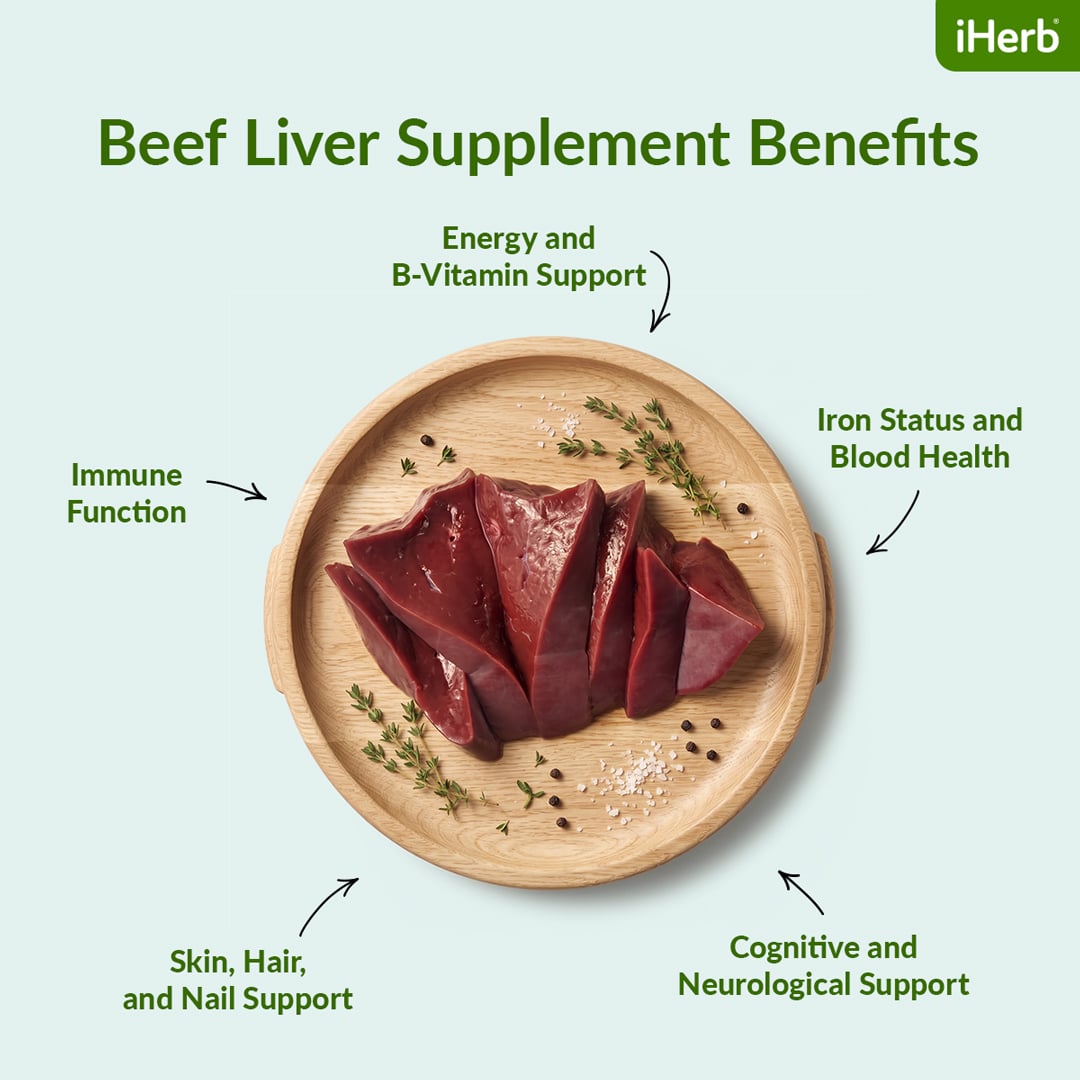
Energy and B-Vitamin Support
Liver is one of the richest natural sources of vitamin B12, along with folate, riboflavin, and niacin, all involved in converting food into cellular energy. People with suboptimal B12 or folate levels (common in older adults, those on metformin, or vegans) may notice a meaningful improvement in energy; people without a deficiency are unlikely to feel a dramatic difference.
Iron Status and Blood Health
Heme iron, the form found in animal tissue, is absorbed more efficiently than the non-heme iron in plant foods (Gallo Ruelas et al., 2024). This makes beef liver supplements reasonable for people at risk of iron deficiency, menstruating women, endurance athletes, and pregnant individuals under supervision. It's not a substitute for a prescribed iron supplement for those looking to maintain healthy iron levels.
Immune Function
Vitamin A, zinc, and copper support immune cell function and epithelial barrier integrity. This is a supportive role, not a treatment for active infection.
Cognitive and Neurological Support
B12 and B6 are cofactors in neurotransmitter synthesis and myelin maintenance. Adequate B12 status supports normal cognitive function; supplementing above what your body needs doesn't add extra benefit.
Skin, Hair, and Nail Support
Vitamin A supports epithelial cell turnover. Oral intake from supplements is a much smaller, systemic exposure than topical retinoids and shouldn't be expected to replicate their effects, but adequate status does support normal skin barrier function.
Beef liver capsules vs. tablets vs. powder: which form is best?
The active ingredient is the same across forms. Capsules mask taste and smell most effectively. Tablets are often more cost-effective per serving but can smell stronger if chewed or crushed. Powder offers dosing flexibility but reintroduces taste and smell. There's no nutritional advantage to one form; potency and sourcing matter more than format.
How to choose a high-quality beef liver supplement
Four things actually affect what you're getting:
Grass-fed vs. grass-finished: "Grass-fed" has no binding regulatory definition. Cattle can be grass-fed for most of their life and still grain-finished in the final months, which is when much of the fat-soluble nutrient profile is set. Look for both terms together.
Freeze-dried vs. heat-dried: Freeze-drying preserves more heat-sensitive nutrients than heat-drying, which uses higher processing temperatures.
Defatted vs. non-defatted: Since vitamin A and vitamin K are fat-soluble, a defatted product may carry less of them than the "liver content" on the label implies. Check if the product specifies this.
Third-party testing: Because the liver metabolizes what an animal is exposed to, testing for heavy metals, hormones, and antibiotic residues is worthwhile; this doesn't mean the liver itself is a toxin reservoir.
How long does it take for beef liver supplements to work?
Most users report energy-related changes within 1 to 3 weeks of consistent use, self-reported, not from standardized trials on desiccated liver specifically. If you are using this alongside a physician's protocol for a known nutrient deficiency, expect your doctor to recheck labs at 8–12 weeks rather than relying on how you feel.
Do beef liver supplements raise cholesterol?
Liver is relatively high in dietary cholesterol compared to muscle meat. Current nutrition guidance indicates that dietary cholesterol has a smaller effect on blood cholesterol for most people than saturated fat intake does. People with diagnosed hyperlipidemia or familial hypercholesterolemia should discuss it with their provider first.
Does beef liver store toxins? debunking a common myth
A common concern: if the liver's job is filtering toxins, does eating it mean consuming them? No, the liver processes and eliminates toxins; it doesn't store them the way fat tissue stores lipophilic compounds. What it stores are nutrients: glycogen, vitamin A, B12, copper, and iron, which are exactly what make it nutrient-dense.
Can beef liver supplements cause inflammation?
No direct evidence supports this for the general population. The confusion likely stems from red/processed meat research on regularly eaten muscle meat in quantity, not small daily doses of organ-meat supplements. People with gout should still be cautious (below), since gout inflammation is driven by uric acid from purines, not a general inflammatory response.
Who should be cautious about or avoid beef liver supplements?
Hemochromatosis and Iron Overload
This is the single most important caution for this category. People with hereditary hemochromatosis or other iron-overload conditions absorb heme iron very efficiently; the same property that makes the liver useful for iron deficiency makes it harmful here. Symptoms include fatigue, joint pain, and, in severe cases, organ damage. Anyone with a personal or family history should be screened before starting, not after feeling unwell.
Pregnancy
The liver supplies preformed vitamin A (retinol), with a narrower safety margin than plant-based beta-carotene. The National Institutes of Health (NIH) sets the adult UL for preformed vitamin A at 3,000 mcg RAE/day; excess preformed vitamin A during pregnancy is linked to birth defects. Pregnant individuals shouldn't add a liver supplement to prenatal vitamins (which already contain vitamin A) without discussing total intake with their OB or midwife.
Anticoagulant and Antiplatelet Medications
Liver is high in vitamin K, which is central to blood clotting. People on warfarin or similar medications should maintain consistent vitamin K intake and involve their prescriber before adding a liver supplement; a sudden increase can affect INR stability.
Gout
The liver is high in purines, which are metabolized into uric acid. People with gout or a history of flares should moderate or avoid it.
Existing Liver Conditions
Anyone with diagnosed liver disease should consult their physician or hepatologist before adding any concentrated organ meat or vitamin A supplement.
Beef liver supplement dosage: how much is too much?
There's no single established RDA for "beef liver supplement" as a category; dosing follows the label. As a general anchor, the NIH sets the adult UL for preformed vitamin A at 3,000 mcg RAE/day; check whether total intake (supplement + fortified foods + any separate multivitamin or cod liver oil) approaches that ceiling. Start at the low end of a product's labeled range.
What does the research say about beef liver's nutrient bioavailability?
Comparative nutrient analyses of raw U.S. beef offal confirm liver's disproportionately high concentrations of iron, copper, and fat-soluble vitamins relative to muscle cuts (Fuerniss et al., 2024). Heme iron bioavailability studies consistently show superior absorption versus non-heme plant iron, though absorption in desiccated supplement form specifically has less dedicated research than fresh liver consumption. Most supporting evidence is extrapolated from whole-food studies.
FAQ
Are beef liver supplements good for you?
For most healthy adults, yes. People with hemochromatosis, gout, or who are pregnant should check with a provider first.
How long do beef liver supplements take to work?
Most notice energy-related changes within 1–3 weeks. For a diagnosed deficiency, expect a lab recheck at 8–12 weeks.
Do beef liver supplements increase cholesterol?
Liver is higher in dietary cholesterol than muscle meat, but dietary cholesterol affects blood cholesterol less than saturated fat does for most people. Those with diagnosed hyperlipidemia should ask their provider.
Can beef liver supplements cause inflammation?
No direct evidence for the general population. People with gout should be cautious due to purine content.
Does beef liver store toxins that end up in the supplement?
No. The liver metabolizes and clears toxins rather than storing them; what it stores are nutrients like vitamin A, B12, and iron.
What's the difference between beef liver capsules, tablets, and powder?
Same nutrients, different delivery. Capsules mask taste/smell best; tablets are often cheaper per serving; powder allows flexible dosing but has more taste/smell.
Are beef liver supplements safe during pregnancy?
Without medical guidance, the liver's preformed vitamin A has a narrower safety margin, and excess is linked to birth defects. Check total intake with your OB.
Can I take beef liver supplements if I have hemochromatosis?
Talk to your doctor first. Heme iron's high bioavailability is a risk if you already have an iron-overload condition.
Why does "grass-fed" on the label not guarantee the best quality?
Because cattle can be grass-fed most of their life and still grain-finished before slaughter, which affects the final fat-soluble nutrient profile. Look for "grass-fed and grass-finished."
The bottom line
Beef liver supplements are a legitimate way to access one of the most nutrient-dense foods available without eating organ meat directly. The benefits of B12, iron, vitamin A, copper, and choline are real and well-documented in whole foods; the supplement form is a reasonable, if less-studied, proxy. Sourcing quality (grass-fed and finished, freeze-dried, third-party tested) genuinely affects what you're getting. The risk profile is where most coverage falls short: hemochromatosis, pregnancy, anticoagulant use, and gout aren't footnotes; they're the actual reasons to talk to a healthcare provider before starting.
References:
Fuerniss, H. F., Gifford, C. L., Mortensen, E. G., Belk, K. E., Engle, T. E., & Woerner, D. R. (2024). Nutrient analysis of raw United States beef offal items. Nutrients, 16(18), 3104. https://doi.org/10.3390/nu16183104
Gallo Ruelas, M., Alvarado-Gamarra, G., Aramburu, A., et al. (2024). A comparative analysis of heme vs non-heme iron administration: A systematic review and meta-analysis of randomized controlled trials. European Journal of Nutrition, 64(1), 51. https://doi.org/10.1007/s00394-024-03564-y
West, A. R., & Oates, P. S. (2008). Mechanisms of heme iron absorption: Current questions and controversies. World Journal of Gastroenterology, 14(26), 4101–4110. https://doi.org/10.3748/wjg.14.4101
DISCLAIMER:
These statements have not been approved by the Food and Drug Administration. These products are not intended to diagnose, treat, cure, or prevent disease.
Shop This Article
Keep Learning
Not All Chlorella Is the Same: What to Know Before Choosing a Supplement
by Stephanie Ray, B.C.N.
1,305 Views
The Ultimate Guide to Methylfolate: Benefits, MTHFR, and How It Compares With Folic Acid
by Francisco Martin, Probase Nutrition
3,947 Views
All About Probiotics for Kids
by Dr. Cherilyn Davis, M.D.
9,367 Views
Sulforaphane Explained: What Is This Powerful Compound and How to Get More of It
by Britta Sather, L.N.
6,238 Views
Bariatric Vitamin Nausea? Here’s What You Can Do
by Dr. Lillian Craggs-Dino, DHA, RDN, LDN
3,911 Views
My Daily Routine: How a Doctor of Eastern Medicine Builds a Day Around Wellness
by Dr. Jenelle Kim, DACM, L.Ac.
6,115 Views
Castor Oil in Your Belly Button: What the Science Actually Says About the Navel Pulling Trend
by Dr. Michael Murray, N.D.
109,138 Views
Lactoferrin Benefits: How This Milk-Derived Protein Supports Immune Health
by Dr. Michael Murray, N.D.
59,376 Views
What Are Phospholipids? Functions and Health Benefits
by Pooja Mahtani, PharmD
5,959 Views
The Science of Supplements: How Vitamin Delivery Systems Have Evolved
by Dr. Saru Bala, N.D.
14,883 Views
5 Foundational Supplements That Have Stood the Test of Time























































 Table of Contents