Key Takeaways
- Fiber is increasingly being studied beyond digestion: Research has explored connections between gut health and brain function through the gut-brain axis.
- Different types of fiber may influence the microbiome differently: Soluble and prebiotic fibers are often discussed in relation to beneficial gut bacteria.
- Gut health and brain health are closely connected: The microbiome is associated with processes involving mood, cognition, and overall nervous system function.
- Fiber-rich foods provide additional nutrients: Fruits, vegetables, legumes, nuts, and whole grains also contribute vitamins, minerals, and antioxidants.
- Dietary patterns matter over time: Consistent intake of fiber-rich foods is commonly emphasized as part of overall wellness habits.
Do you ever walk into another room and temporarily forget why? Did you recently run into an old acquaintance and struggle to remember her name? Have you entered an old home address on a form? How about forgetting an important appointment or a family member’s birthday?
If you are a middle-aged or older adult, you can likely relate to at least one of these situations. Minor, short-term lapses in memory, concentration, and attention, which we often call “brain fog,” are considered a normal part of aging. More serious health conditions, such as dementia and Alzheimer’s disease, are diagnosed when these instances recur more frequently and begin affecting one’s functions of daily living and social behaviors.
The Foggy Facts
Still, even these minor cognitive struggles can cause embarrassment and inconvenience or impair our productivity. While the symptoms and impacts of brain aging vary widely between individuals, is there anything we can do to minimize the underlying issues that trigger these fuzzy episodes?
Just like the aging of our bodies, the resilience and responsiveness of our brains decline as our cells and tissues take longer to repair and reproduce, neurons communicate less effectively, and blood flow decreases. Stress and fatigue may further influence the balance of hormones and neurotransmitters that maintain our focus and ability to think and react.
But it turns out that we have a lot more control over the health and longevity of our brains than we might realize, and it only takes a second thought on what we put on our plates. Not only does a healthy diet provide adequate nutrients to fuel our days and maintain optimal health, but the quality of our food also begins influencing the function of our brains even before it’s fully digested.
The Gut Microbiome: Vanguard for the Aging Brain
Believe it or not, the gut-brain axis concept was first proposed by psychiatrists in the 1880s, but it remains the topic du jour of health and nutrition researchers today, and for good reason! Despite mind-blowing advances in microbiology and genetic technology that have confirmed this pre-scientific theory, it seems we may never fully know or appreciate the complexities and contributions of the billions of organisms that share our bodies and affect our health.
There is growing evidence that our individual microbiome is even a factor in directing our behavior. The nature and composition of our diets significantly shape the diversity, abundance, and function of our gut bacteria, and their prominent communication with our brain suggests that taking care of our microbiome is high on the list of ways to protect the brain as we age.
It is well-established that one of the primary mechanisms through which the microbiome affects the entire body is through the immune system. The gut is essentially the starting line for our innate immune system, where resident gut bacteria help to fend off harmful organisms and detoxify what we ingest.
Furthermore, they serve to inform and activate our adaptive immune response, potentially amplifying inflammatory cascades across multiple organs. Although it is strictly guarded by the blood-brain barrier, the brain has its own unique and robust immune system. Many metabolic and cardiovascular disease states are associated with an imbalanced microbiome, and rising evidence adds cognitive disorders as an outcome of ongoing systemic inflammation.
Fueling your brain starts on your plate
Fiber may not grab public attention like other major dietary components, such as fat and protein, but it probably should. Based on how critical it is to the health of our gut bacteria, adequate dietary fiber lays the foundation for how well the microbiome benefits the rest of our bodies.
Multiple studies have shown that the amount and variety of fiber-rich fruits and vegetables in our diet determines the proportion of favorable bacteria that discourage excess inflammation and produce highly beneficial byproducts. As bacterial species munch down on fiber, they not only release brain-essential vitamins, minerals, and amino acids that form important neurotransmitters, but they also produce short-chain fatty acids, including butyrate, that have uniquely powerful and protective effects. Many experts place butyrate at the intersection of aging and the microbiome-gut-brain axis. Butyrate is a key modulator of inflammation from the gut to the brain, specifically counteracting damaging cytokines and free radicals generated by toxic metabolites.
While well-fed gut bacteria receiving a consistent quantity and variety of fiber generate butyrate and other anti-aging substances, research also demonstrates that a poor diet has the opposite result. Both human and animal studies have shown that diets low in fiber and high in animal protein, refined carbohydrates, and saturated fat can lead to disproportionate populations of bacteria that promote pro-inflammatory processes. Also known as dysbiosis, an imbalanced microbiome creates havoc that starts in the gut but can eventually influence the brain.
If the rest of the body is chronically inflamed, a condition highly associated with a low-fiber diet, the brain’s immune cells stay in overdrive. As harmful organisms release destructive molecules, intestinal damage sends signals along the gut-brain axis, where activated immune cells inadvertently damage brain tissue and neurons. As proof of this, food allergies, gluten intolerance, and inflammatory intestinal disorders are all strongly associated with brain fog, mood disorders, and cognitive impairment.
Fiber-Powered Brain Performance
Since many Americans, especially older adults, consume significantly less than the recommended daily intake of fiber, they may be missing out on one of the best ways to maximize brain health and promote a clear, dynamic, energetic mind. The good news is that it’s simple to increase our fiber intake.
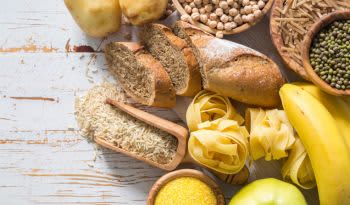
Persistent dietary advice from the experts prioritizes vegetables, fruit, whole grains, beans, and other fiber-containing foods in our daily diets. Not only do these foods contain inflammation-fighting antioxidants, but they also represent the preferred menu of our friendly gut microbes. Plants provide both soluble and insoluble fiber, as well as more recently discovered, fiber-like, resistant starch that gut bacteria adore.
A recent, widely distributed research study suggests that soluble fiber may provide particular benefits for brain aging and cognitive health. At a 20-year follow-up in a population of over 3,500 Japanese adults, individuals consuming the greatest amount of total dietary fiber had a significantly reduced incidence of dementia in older age, even when accounting for other risk factors such as obesity, high blood pressure, high cholesterol, and Type 2 diabetes. Interestingly, the inverse relationship between fiber consumption and cognitive decline was strongest for soluble fiber and resistant starch from potatoes. It turns out that soluble fiber (and its doppelganger, resistant starch) is the perfect starting ingredient for the butyrate that nourishes and protects our brain.
How to Get More Fiber
So, while all plants are perfect packages of fiber, for those of us who have a track record of losing our keys, forgetting our anniversaries, and drawing a blank on an old friend’s name, it looks like we may want to start adding more sources of soluble fiber to our carts.
Oats, apples, peas, citrus fruits, carrots, black beans, and even avocados are great sources of soluble fiber. Fitting in the recommended 25 g (women) and 35 g (men) of fiber per day can be as simple as choosing fruit as a snack, oatmeal for breakfast a few days a week, and a handful of beans to your daily veggie-filled salads. For an even easier boost that provides an instant treat for your microbiome, natural prebiotic powders from psyllium and chicory are backed by research to enhance gut health by serving as ideal starter fuel for butyrate.
Finally, while we might start only thinking about brain aging after a few too many mental foibles, setting ourselves up for a thoughtful and fruitful life should start at the outset. The gut-brain axis is instrumental in the parallel development of our digestive system, microbiome, immune system, and our brain before we’re even born and throughout childhood. Longevity doesn’t just mean longer years; aging well includes a bright and happy mind throughout life.
Let’s add a few more servings of fiber to our (and our kids’) plates, and let’s maximize the vitality and resilience of our brains for the long haul!
References:
- Dash, S., Syed, Y. A., & Khan, M. R. (2022). Understanding the role of the gut microbiome in brain development and its association with neurodevelopmental psychiatric disorders. Frontiers in Cell and Developmental Biology, 10, Article 880544. https://pmc.ncbi.nlm.nih.gov/articles/PMC9048050/
- Giau, V. V., Wu, S. S., Jamerlan, A., An, S. S. A., Kim, S. Y., & Hulme, J. (2018). Gut microbiota and their neuroinflammatory implications in Alzheimer’s disease. Nutrients, 10(11), Article 1765. https://pubmed.ncbi.nlm.nih.gov/30441866/
- Jena, A., Montoya, C. A., Mullaney, J. A., Dilger, R. N., Young, W., McNabb, W. C., & Roy, N. C. (2020). Gut-brain axis in the early postnatal years of life: A developmental perspective. Frontiers in Integrative Neuroscience, 14, Article 44. https://pubmed.ncbi.nlm.nih.gov/32848651/
- Matt, S. M., Allen, J. M., Lawson, M. A., Mailing, L. J., Woods, J. A., & Johnson, R. W. (2018). Butyrate and dietary soluble fiber improve neuroinflammation associated with aging in mice. Frontiers in Immunology, 9, Article 1832. https://pubmed.ncbi.nlm.nih.gov/30154787/
- Noble, E. E., Hsu, T. M., & Kanoski, S. E. (2017). Gut to brain dysbiosis: Mechanisms linking Western diet consumption, the microbiome, and cognitive impairment. Frontiers in Behavioral Neuroscience, 11, Article 9. https://pmc.ncbi.nlm.nih.gov/articles/PMC5277010/
- Reynolds, A., Mann, J., Cummings, J., Winter, N., Mete, R., & Te Morenga, L. (2019). Carbohydrate quality and human health: A series of systematic reviews and meta-analyses. The Lancet, 393(10170), 434–445. https://pubmed.ncbi.nlm.nih.gov/30638909/
- Saji, N., Niida, S., Murotani, K., Hisada, T., Tsuduki, T., Sugimoto, T., Kimura, A., Toba, K., & Sakurai, T. (2019). Analysis of the relationship between the gut microbiome and dementia: A cross-sectional study conducted in Japan. Scientific Reports, 9(1), Article 30700769. https://pubmed.ncbi.nlm.nih.gov/30700769/
- Shi, H., Chang, Q., Liang, B., Su, J., Wang, X., Wang, P., Pei, H., & Huo, X. (2021). A fiber-deprived diet causes cognitive impairment and hippocampal microglia-mediated synaptic loss through the gut microbiota and metabolites. Microbiome, 9(1), Article 223. https://pubmed.ncbi.nlm.nih.gov/34758889/
- Valdes, A. M., Walter, J., Segal, E., & Spector, T. D. (2018). Role of the gut microbiota in nutrition and health. BMJ, 361, Article k2179. https://pubmed.ncbi.nlm.nih.gov/29899036/
- Yamagishi, K., Maruyama, K., Ikeda, A., Nagao, M., Noda, H., Umesawa, M., Hayama-Terada, M., Muraki, I., Okada, Chika., Tanaka, M., Kishida, R., Kihara, T., Ohira, T., Imano, H., Brunner, E. J., Sankai, T., Okada, Takeo., Tanigawa, T., Kitamura, A., Kiyama, M., & Iso, H. (2022). Dietary fiber intake and risk of incident disabling dementia: The Circulatory Risk in Communities Study. Nutritional Neuroscience, 26(2), 148–155. https://pubmed.ncbi.nlm.nih.gov/35125070/
DISCLAIMER:
These statements have not been approved by the Food and Drug Administration. These products are not intended to diagnose, treat, cure, or prevent disease.



























































 Table of Contents